

Decoding Fender Custom Shop Serial Numbers: What They Tell You, and What They Don't

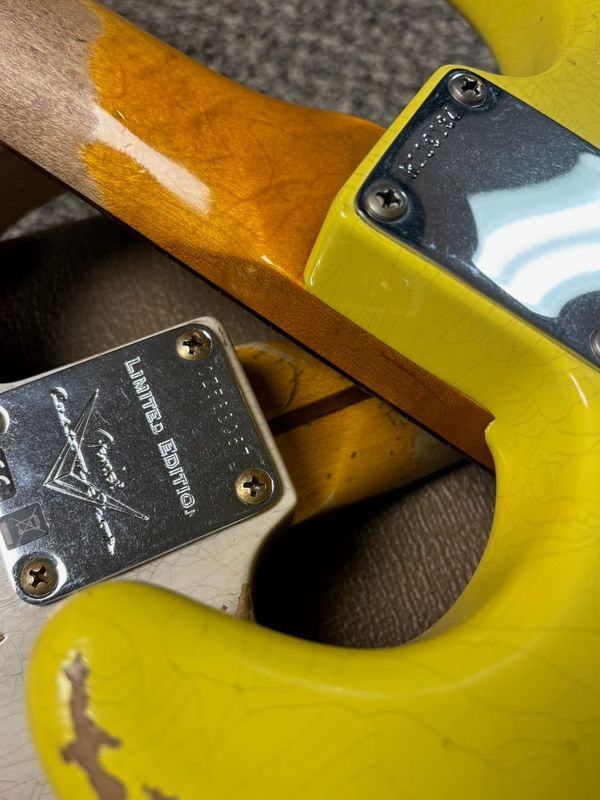
When purchasing a Fender Custom Shop (new or used), how much emphasis should one place on the serial number?
Serial numbers on Fender Custom Shop guitars are at best confusing, and at worst misleading. In many instances, the serial number may not really tell an owner much valuable information. There are some basic guidelines or reference points, but the real truth lies in the Certificate Of Authenticity (COA). Nowadays, Custom Shop guitars are shipped with a premium leather(ette) binder which includes a printed certificate that matches the serial number to the guitar's exact model, and includes the date it was signed. Also included (in current times) is the Floor Traveler – a specifications build sheet showing a detailed breakdown of all the parts.
Fender Custom Shop serial numbers are confusing because they were not intended to serve as a strict chronological dating system, the way most other manufacturers’ serial numbers traditionally function.
On the whole, Fender has used multiple parallel serial-number schemas simultaneously, and Custom Shop production categories often have their own prefixes.
The CZ prefix is probably the most common modern Fender Custom Shop serial format.
Example:
· C = Custom Shop
· Z originally related to the 2000s-era numbering scheme (similar to mass-produced Fender guitars which use sequential letter-prefixes for decades, e.g., N for 90s, Z for 2000s).
· The numeric portion that follows the “CZ” is primarily a sequential production number, not a direct year code
You'll also see CN-prefix serials on earlier (1990s) Custom Shop instruments.
As the most common prefix, “CZ” was introduced during the early 2000s and continued far beyond a single decade; a lot of Custom Shop guitars built from the early 2000s through well into the 2020s carry CZ serials. Some guides will tell you CZ was retired around 2012; I own a 2024 Custom Shop guitar that says otherwise.
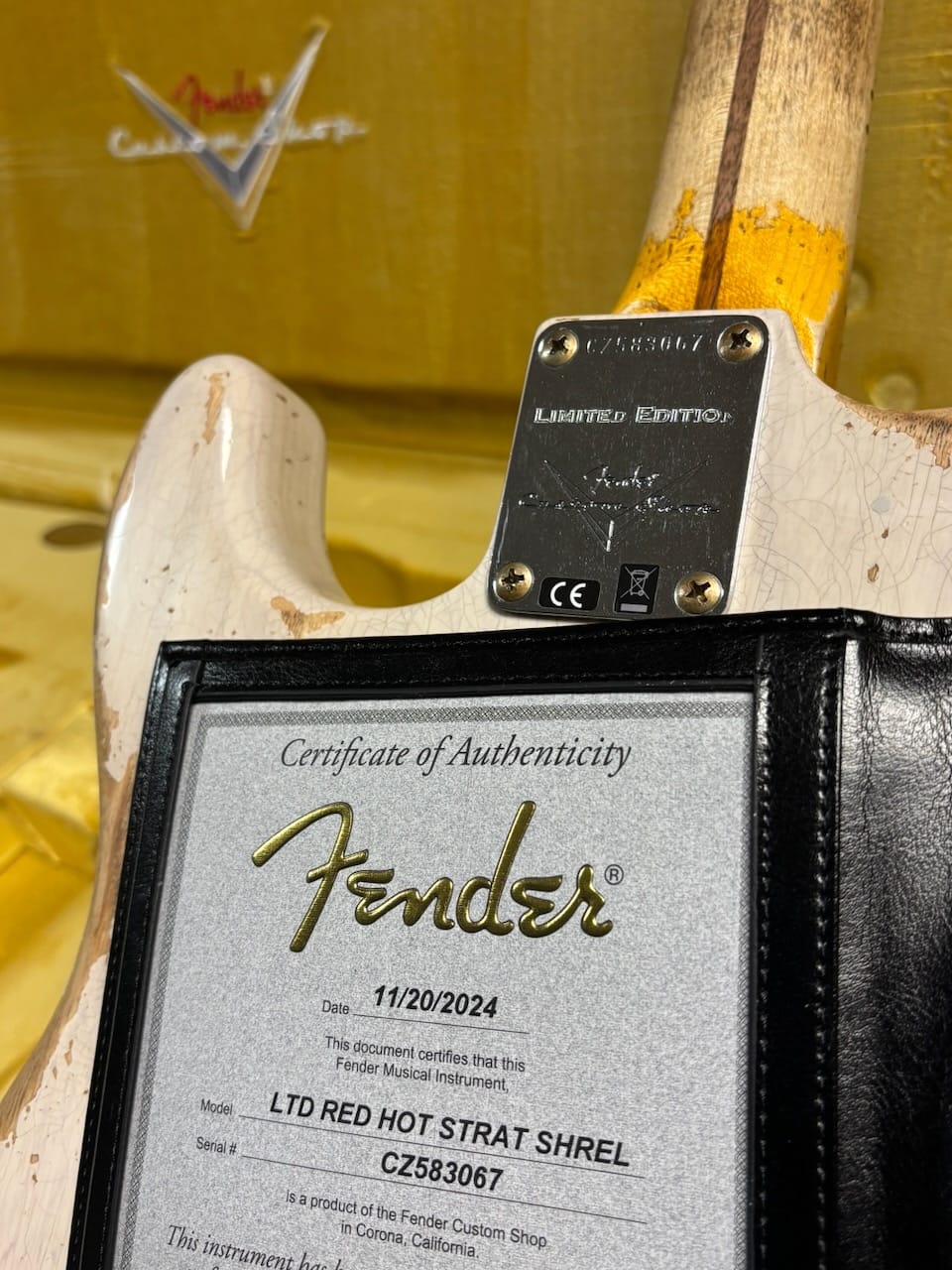
The serial number alone will not necessarily tell you the exact build year. For that information, one should refer to the COA, which will have the Serial No., the Model Name, and the Date the COA was produced / signed.
The R-prefix serial numbers are usually associated with the Custom Shop's Time Machine series. Historically, "R" was commonly used on Custom Shop vintage recreations, and is frequently found on Relics, Closet Classics, NOS, Time Machine Strats and Teles.
The “R” serial sequence is largely independent of CZ-numbered instruments.
So, does that mean that my Relic’d Fender Custom Shop guitar must have an “R” serial number? Absolutely not; I have more than a dozen “CZ” prefix FCS guitars, with varying levels of relic detail applied.
Further, I’ve talked to some dealers who custom order team-built instruments for their own shops, with varying specifications. I’ve seen FCS dealer-specific instruments for Wildwood, Willcutt, Musikhaus Hermann and Detroit Guitar… just to name a few dealers. I have not seen dealer-specific serial numbers, but specifications on instruments can certainly vary per dealer requests.
As a standard guide, here is a list of common FCS Serial Prefixes:
Prefix | Typical Use |
CZ | General Custom Shop production |
R | Time Machine / Relic / Vintage-style instruments |
CN | Found on specific Custom Shop instruments made during the 1990s. (A lot of noise about counterfeit FCS instruments sporting a “CN” prefix serial number, but real ones do exist) |
V | Vintage Reissues (made specifically at the Custom Shop - will have the Custom Shop logo on back of headstock) |
You may notice a prefix missing from that table.
Search around and you may find HR listed as the Masterbuilt designation in a fair number of online prefix charts. I left it out deliberately. I've never seen an HR-stamped instrument — not once.
So, I asked Fender directly. The first reply from their Consumer Relations desk (very helpful and responsive, I might add) repeated the familiar line: HR equals Masterbuilt. I pushed back — I've never encountered one, and the Masterbuilts sitting at my own dealer wear plain R and CZ serials. The second reply walked it back: the rep couldn't locate any Fender-issued documentation establishing HR as a Masterbuilt category, acknowledged that real-world examples are scarce, and offered the likeliest explanation: "HR" is everyday shorthand for Heavy Relic on spec sheets, travelers, and dealer listings. Somewhere along the line, a finish designation got promoted to a serial prefix.
His parting advice, one Fender nerd to another, was to trust the traveler and the COA over the prefix every time — Custom Shop serial practices have "never been nearly as rigid as collectors would like."
For Fender Custom Shop instruments, the serial prefix does not reliably tell you whether a guitar is Team Built or Masterbuilt.
Some older Masterbuilt guitars have used personal, sequential serialization or the Master Builder's initials along with the year (e.g., John Cruz builds often feature JC followed by the year and build number).
Modern Masterbuilts mostly do not have a unique prefix — they live inside the same R and CZ pools as Team Built guitars, and the thing that tells them apart is the paperwork, not the serial. The serial can't even tell you Team Built from Masterbuilt — the COA does that.
Here’s an example: The Music Zoo’s listing of a 1957 Stratocaster Ultimate Relic Masterbuilt by Dale Wilson — serial CZ577281 — a bona fide Masterbuilt wearing the same "general production" prefix as dozens of team-built guitars. The serial won't separate the two. The paperwork will. Even at my own local dealer – Detroit Guitar – they have a handful of Masterbuilts currently – and each sporting an “R” serial on their respective neckplates.
So, between a CZ Masterbuilt at The Music Zoo and the R-serial Masterbuilts on Detroit Guitar's wall, the prefix is clearly no guide to build tier.
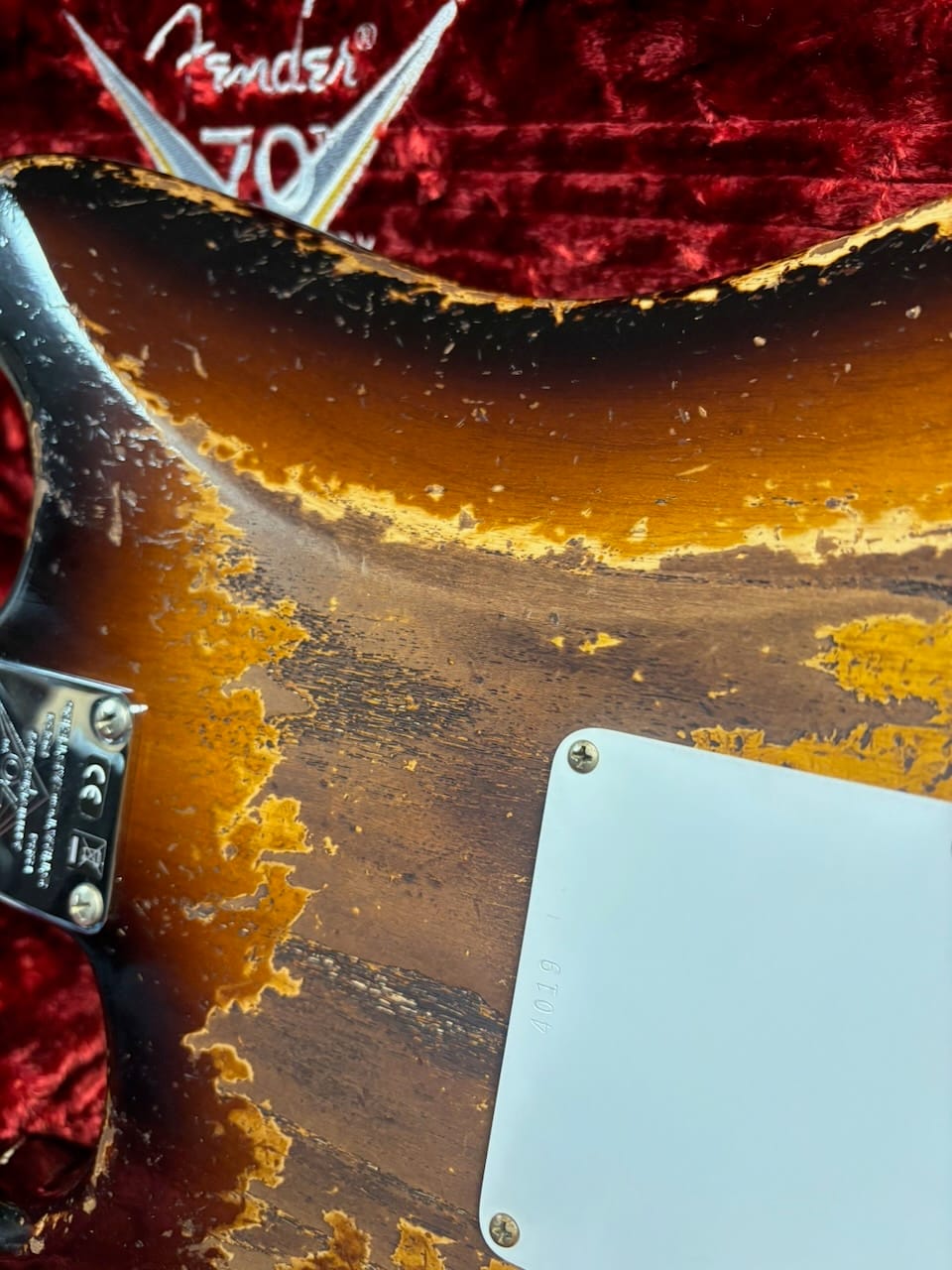
Let’s further complicate matters, shall we? Take, for example the 2024 issued FCS 70th Anniversary Stratocasters. True to their 1954 predecessors, these instruments simply have four-digit serial numbers (example: 4019) imprinted on their rear cavity cover plates… wouldn’t want to remove and lose one of those.
Is there a Master FCS Serial Number Resource?
Unlike the dozens of online resources for dating traditional ‘Fender’ guitars, there is no definitive, publicly available resource that helps users to search and decode Fender Custom Shop serial numbers. Further, Fender Custom Shop serial numbers do not show up in Fender’s own online Serial Number Lookup.
Even the mighty Floor Traveler specification sheet won't necessarily help you – a common misperception is that the Floor Travelers include the specific serial number – they, in fact, do not.
The only truly definitive way to validate a Fender Custom Shop serial number is to correlate the guitar with its specific COA.
Which is exactly why I won't purchase an FCS without one. I could forego the original case, and even the Floor Traveler if I had to (although not ideal) – but not the COA. A replacement is a real hassle to secure, and given the time and effort involved, I'd expect a significant discount on any FCS guitar sold without one. Buyer beware.
Share this article
Written by